Kano
The Kano model is a theory for product management/development and customer satisfaction developed in the 1980s by Noriaki Kano. This model provides a framework for understanding how different features of a product or service impact customer satisfaction, allowing organizations to prioritize development efforts effectively. According to the Kano Model, customer preferences are classified into five distinct categories, each representing different levels of influence on satisfaction. https://en.wikipedia.org/wiki/Kano_model
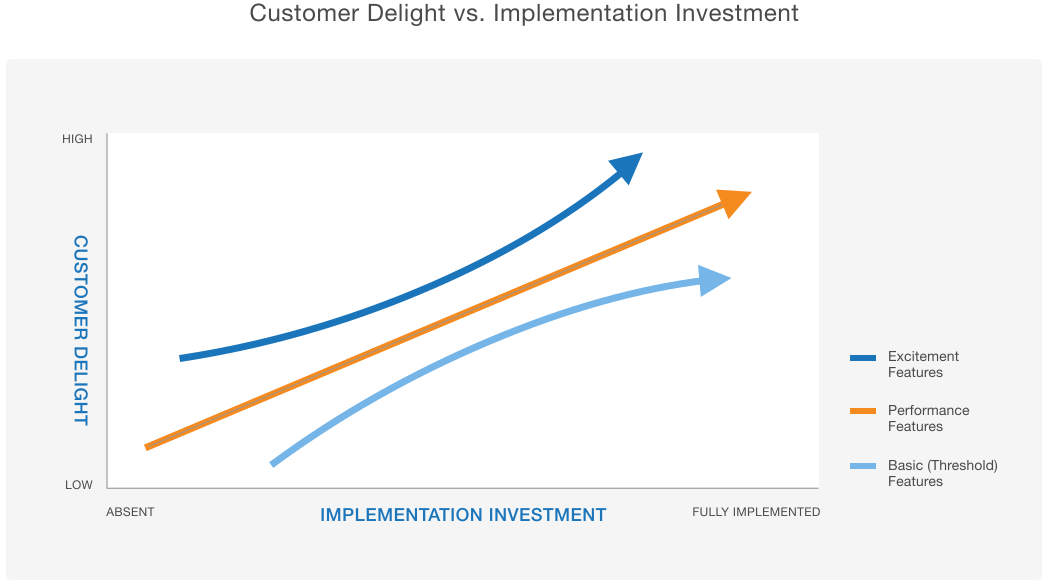
- basic/must-be: table-stakes, requirements that the customers expect and are taken for granted
- performance/one-dimensional: result in satisfaction when fulfilled and dissatisfaction when not fulfilled. These are attributes that are spoken and the ones in which companies compete.
- excitement/attractive: provide satisfaction when achieved fully, but do not cause dissatisfaction when not fulfilled
- Indifferent: aspects that are neither good nor bad, and they do not result in customer satisfaction or customer dissatisfaction
- Reverse/dissatisfaction: high degree of achievement resulting in dissatisfaction and to the fact that not all customers are alike
You can also think of the Kano Model as the “Customer Delight vs. Implementation Investment” approach..
Edited: | Tweet this! | Search Twitter for discussion

 Made with flux.garden